






Improving Community Health Quality: How Polindes Generates Independent Supplementary Food Sources
Tuban, 26 April 2026 – One of the key priorities of the Government of Indonesia in supporting national development is human capital development, particularly in strengthening the health sector. This is reflected in the Asta Cita—the government’s main priority programs—where public health serves as a fundamental pillar in enhancing Indonesia’s human resources.
However, these efforts continue to face several challenges, with one of the persistent issues being the relatively high prevalence of stunting in Indonesia. In 2024, the stunting prevalence was recorded at 19.8%. Although the figure has been declining annually, stronger support and collaboration among stakeholders are still required to drive more structural and fundamental improvements.
Referring to various studies, one of the most effective approaches to addressing stunting is through specific nutritional interventions, particularly during pregnancy, as well as nutritional support for infants and toddlers, especially those under the age of two. In this regard, Posyandu (integrated health service posts) play a crucial role as the frontline of community health improvement—not only as a medium for public health education but also as potential providers of independently sourced nutritious food for their beneficiaries.
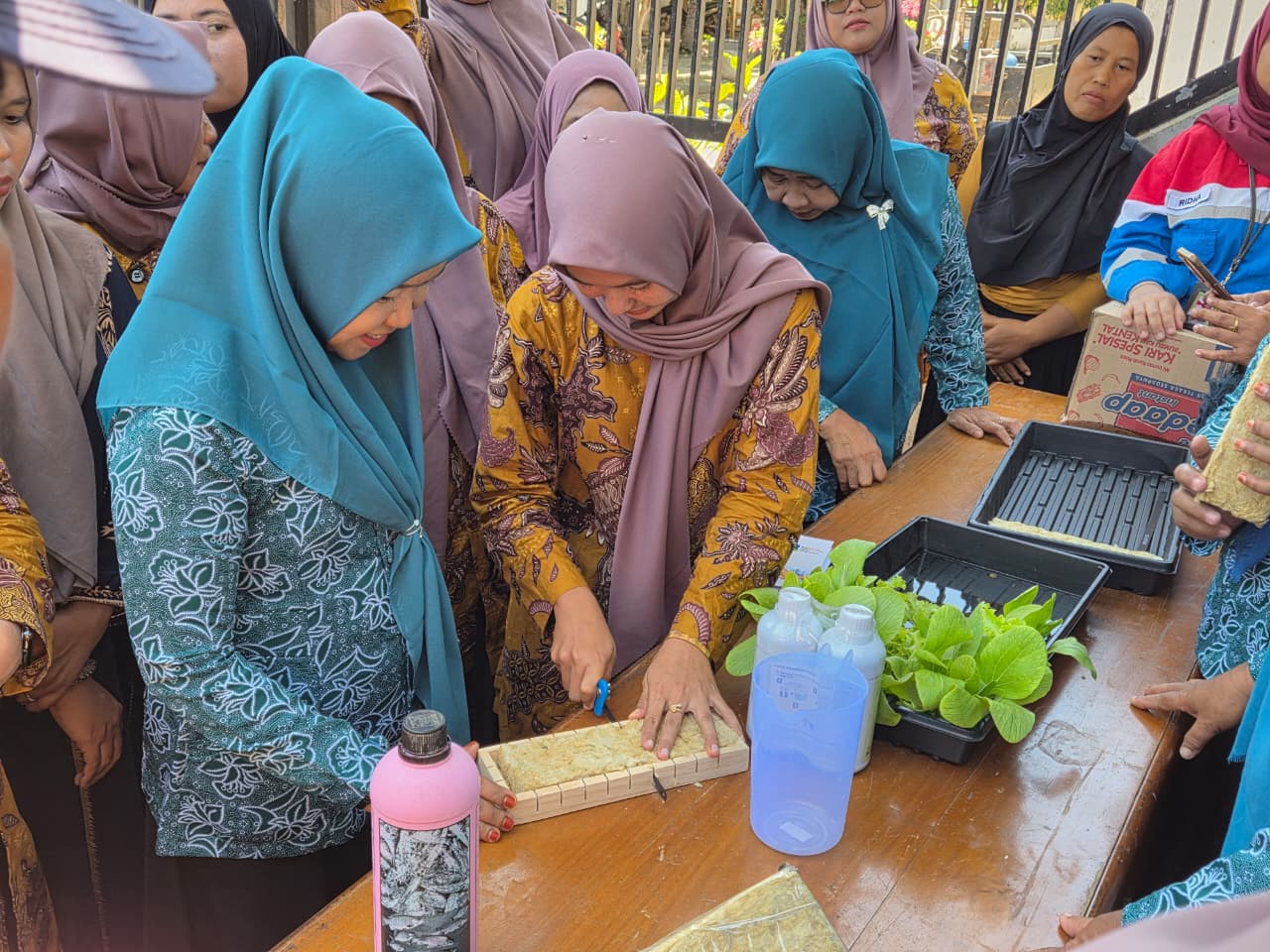
One initiative that has been introduced is the provision of animal protein and vegetables through simple aquaponic systems, integrating fish and plant cultivation. This approach was implemented by cadres of Polindes Cipta Manunggal in Mentoso Village during an aquaponics training conducted by Kampoeng Tani Tuban on Saturday (25 April 2026) at the Mentoso Village Hall.
In addition to Mentoso Village, cadres from Polindes Mitra Asih in Rawasan Village also participated in a similar training session held on Friday (24 April 2026).
Eko Hariyanto (40), Head of Mentoso Village, expressed his appreciation for the support provided by PT Pertamina Rosneft Pengolahan dan Petrokimia (PRPP) through the 2026 Cantik Di Hati program.
“Thank you to Pertamina (PRPP) for this initiative. We hope the program will continue to be supported so that the benefits of aquaponics can be widely felt,” he stated in his remarks prior to the activity.
A similar sentiment was shared by Dwi (30), a PKK cadre from Rawasan Village, who believes that the outcomes of this program will significantly contribute to the provision of supplementary nutrition for toddlers.
The aquaponics training delivered by Kampoeng Tani Tuban forms part of PRPP’s broader efforts to actively contribute to improving community health quality in areas surrounding the Grass Root Refinery (GRR) Tuban Project. This initiative is carried out through the Cantik Di Hati health education program, which has been implemented by the Company since 2024. The aquaponics initiative builds upon the 2025 program, which had previously been implemented in Wadung and Sumurgeneng Villages.
Meanwhile, in a separate occasion, Reizaldi Gustino, President Director of PT Pertamina Rosneft Pengolahan dan Petrokimia, reaffirmed the Company’s commitment to developing communities surrounding the GRR Tuban Project, including in the area of public health improvement.
“The younger generation around the GRR Tuban Project area will become future leaders and key drivers of Indonesia’s development. Therefore, it is essential to ensure strong public health quality from an early age. A healthy body supports better thinking capacity and creativity, which will ultimately enhance the quality of human resources in Tuban in the future,” he stated.
This year, a total of 59 participants, consisting of Posyandu and PKK cadres from Mentoso and Rawasan Villages, took part in the Cantik Di Hati program.
In addition to the aquaponics training, the program also included a session on the importance of mental health, delivered by PRPP’s HSSE team.
The Cantik Di Hati program not only supports the fourth pillar of Asta Cita—strengthening human capital—but also reflects the GRR Tuban Project’s commitment to implementing the Sustainable Development Goals (SDGs), particularly Goal 2: Zero Hunger and Goal 3: Good Health and Well-being.

News Highlight

